
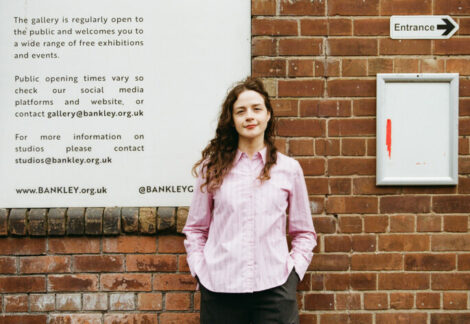
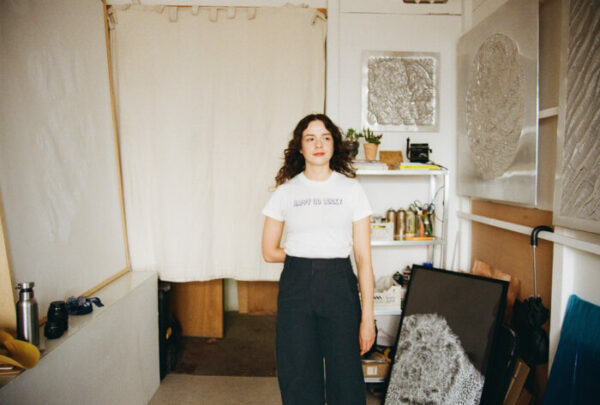
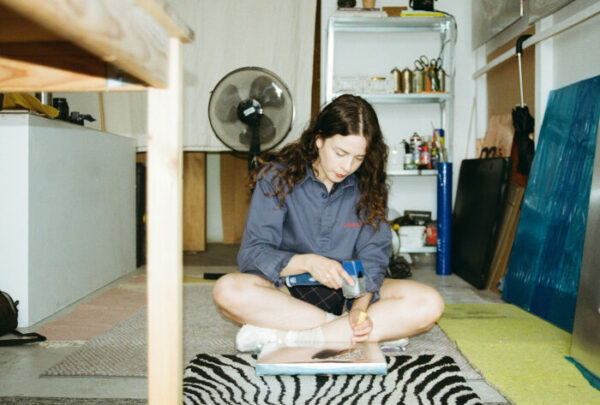
Based at Bankley Studios, tucked away on a cobbled street behind the main drag in Manchester’s Levenshulme, Rosie is one of around 30 makers, artists and photographers who create here every day. She works across metal, paper and wood, building mesmerising, organic patterns inspired by natural forms and slow, meditative processes. Much of her practice takes place between the floor and the workbench – drawing, piercing, hammering – work that grows gradually, line by line and hole by hole.
Rosie first came to wider attention early on, winning Manchester Craft & Design Centre’s MMU Graduate Solo Exhibition Award back in 2015. Nearly a decade later, she returned with her inaugural solo exhibition Container, held at Bankley Studios in 2024, bringing together years of experimentation in metal and materiality.
That hands-on, physical approach shapes what she wears. Studio days call for layers she can peel off, soft fabrics that don’t dig in, and clothes that can handle being leaned on, stretched in and generally lived in. Outside the studio, her wardrobe stays unfussy — a mix of Uniqlo staples, second-hand finds and a few pieces she knows will fit, work hard and still feel like her.
In this edition of My Uniform, Rosie talks about dressing for different processes, her boxy-shirt obsession, and how clothes help her shift from long days in the studio to evenings at exhibitions.
Hi, Rosie, what are you wearing?
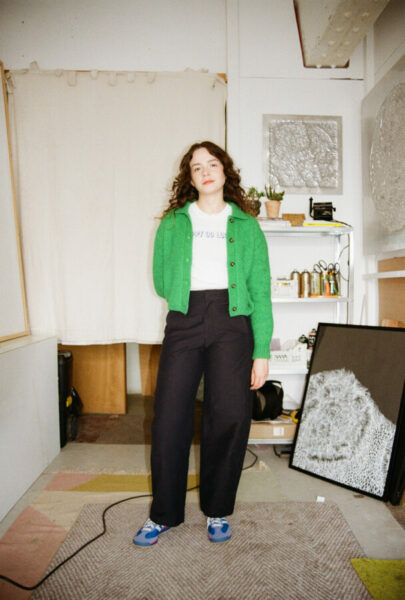
The pink shirt is from Whistles – I love the shade – and my trousers are from Uniqlo. The cut of them just really suits me. My green cardi is from & Other Stories – they do great knitwear – and the chore shirt from Fred Aldous in Manchester. I love vintage-look slogan tees too. This one says ‘Happy Go Lucky’.
What’s your day-to-day studio uniform?
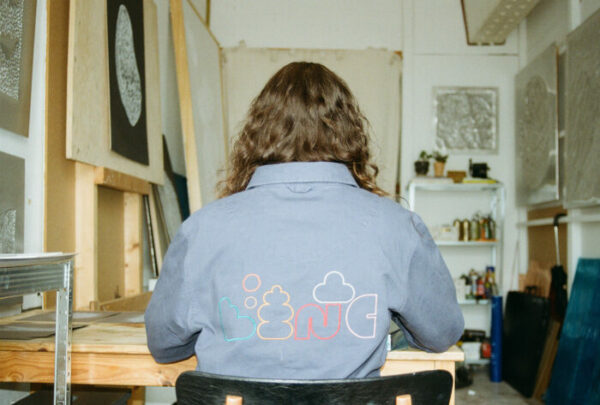
I always dress in layers. Usually a shirt with a vest. I need things I can peel off when it’s too hot, but when it’s cold in the studio, it’s really cold! So I’ll do a vest, a long sleeve T-shirt, a jumper, then an oversized shirt. If I’m doing drawings, I can dress up a little bit more because it doesn’t require too much moving about. Whereas if I’m doing a large piece, I need comfy trousers with stretch so there’s nothing digging into me when I’m sitting on the floor. A comfy top, anything with a nice soft fabric. Natural fabrics are best – denim or wool with a stretch, or linen – just anything hard-wearing and comfortable.
What’s your studio like and how do you start the day?
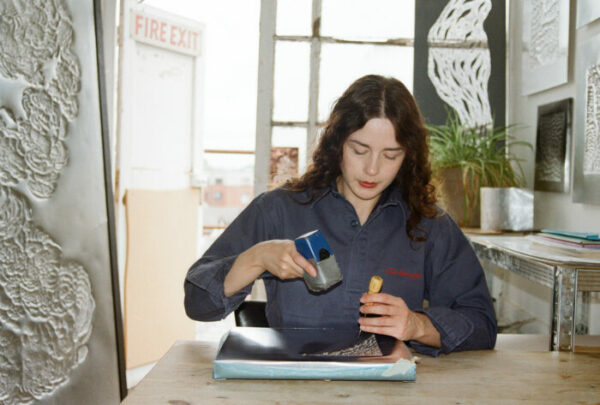
My studio days vary. I might head in with a rough idea of what I want to achieve: a day dedicated to drawing, or to hammering metal. If it’s hammering, I’ve got breaks built in — being on the floor all day means I need to take a rest. Some days it’s prepping, like wrapping metal onto frames or getting materials ready, before thinking about the imagery. I plan areas I won’t hammer, then let the piece evolve organically as I work.
How did you start working with metal?
I began with drawing and paper-based work — creating lines and patterns, and letting it evolve organically. I loved those kind of visuals that weren’t symmetrical or repeating. I was working with a white pen on dark paper and I wanted to translate that effect into natural light, so I pierced holes in paper. I’ll often light pieces from behind to illuminate the visual. I love how it can look like clouds forming. I work with wood too. It’s a similar, slow process, burning one line at a time.
How did that turn into the installation work you do now?
I always envisioned creating large pieces and outdoor work. When I was starting out, I sent a proposal to a festival in Croatia saying I wanted to do metal, even though I hadn’t actually worked with it. They took me on but my materials were lost in transit, so the festival’s art director found thin aluminium scraps nearby. We worked with what we had — one hammer and very little else — and it ended up beautifully textured. It made me realise that this was something I wanted to continue and master. I’ve also worked with Glastonbury Festival. The first metal piece I did there was in 2019. It was so exciting because it expanded what I thought my practice could be.
What’s involved in making these large metal pieces?
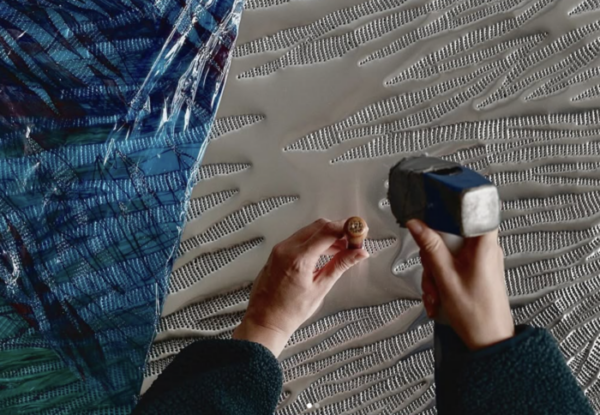
I get big aluminium sheets – they’re thin and easy to work with – then I make the frames with help from a furniture designer friend. Once I have the frame and ply underlay, I score and hammer the metal – it’s slow, painstaking work. Most perforated metal is machine-done and very clean, but I hand-pierce mine, and I love the dots, the indents, the way the negative space forms lovely shapes and light plays through it.
You started in textiles – how did that shape your creative path?
I was always drawn to textiles because of my family’s interiors business, where I worked as a kid. So I always had an interest in fabrics, wallpapers and surface patterns. I loved processes and craftsmanship: embroidery, weaving, printing and dyeing. Textiles taught me to appreciate material and surface, which fed into how I think about pattern and drawing. It led me down a fine art path where I could explore texture and process more freely.
How do you balance planning versus intuition in your work?
It’s definitely both. I’ll come in with a plan – “today is drawing” or “today is hammering” – but it changes as I go. Hammering metal, drawing and burning wood are all slow processes and I kind of like that once I’ve made a mark, you can’t erase it. You learn to trust the work and keep adjusting.
Do your clothes influence your creative mindset?
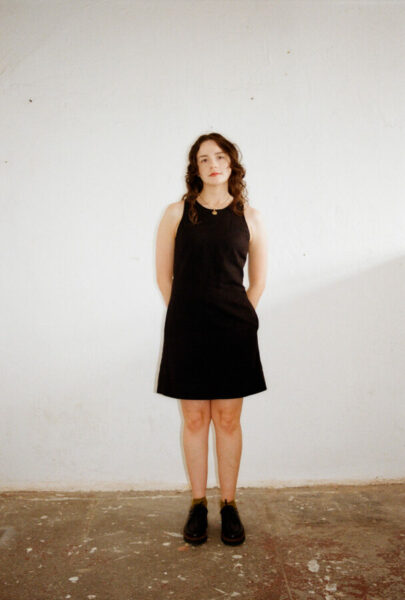
I think so. Getting ready can put me in the right mindset. I might go somewhere after the studio, so I’ll have a bag ready with something smarter like an LBD when I want to feel good in what I’m wearing. I’m very practical though. I always check the weather in the morning so I know if I need a raincoat, fleece or cardi. I’ve become very efficient with that sort of thing.
Are there any items you’re reaching for constantly right now?
I’m going through a boxy shirt era! I’m obsessed with Uniqlo. So probably their boxy shirts to go over T-shirts and I wear them open as well. I like the pop of the collar. I also love vintage shops and fairs, Vinted and charity shops. And I shop online at stores such as Damson Madder, Aligne, Topshop on ASOS. Jeans-wise, Levi’s or Abercrombie & Fitch. They’re the best for my body type. And Mango is my cheaper go-to for occasion wear.
Do you dress differently for exhibitions or events?
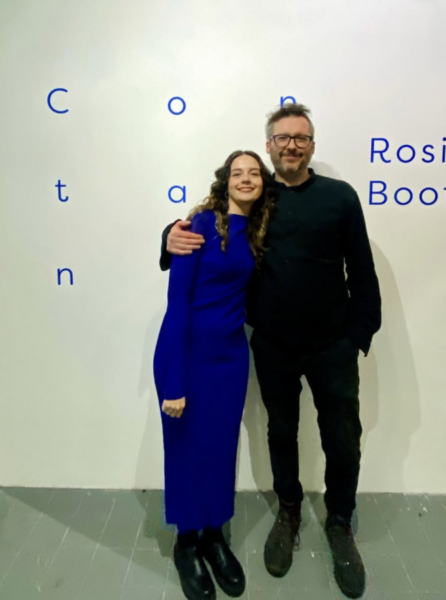
For my Container exhibition, I wore an & Other Stories dress with loafers – simple, comfortable, and I love an LBD. That blue dress I picked specifically because of the colour. I love that blue at the moment, and it looked really nice against the metal. When I went to Glastonbury last year, I really planned my looks for the first time – mostly with practicality in mind. I packed lots of colour and pattern, and one day I wore a full-on sequinned shift dress, but it was actually quite comfy because it had stretch underneath. I felt great in it.
How has your personal style evolved?
I do think about what I wear and I’m more aware of what looks good on me. It always starts with the fit, then the colour. And I do want to be comfortable but also look great! When I was younger, I shopped in charity shops more randomly; now I shop more efficiently, knowing what I want. Fit has always mattered – I’m petite, so I alter clothes to make them work for me.
Finally — tell us about your earliest memory of clothes or style.
I really loved red as a kid. I remember a velvet shift dress I got one Christmas. It was a deep red with a kind of brocade pattern in black and red. It was so pretty. I have two older sisters and we loved Tammy Girl as well. I really enjoyed choosing my own outfits. I also had these bright blue clog-trainer type shoes that I wore to primary school once, though my mum wasn’t happy about it! All my friends were like, ”They’re so cool!”
Find Rosie on social media @rosieboothart or browse check out her website www.rosiebooth.com
Show support for Bankley Studios by visiting their GoFundMe page.
Photos: @mattbramf and @liam_Chilton